Austin here, with some thoughts on wood chipping. We have been getting quite a few questions about why someone should chip up their trees, how to chip safely, and other technical questions. This blog takes our top tips and gives them straight to you!
Wood chipping is a great method for managing forest debris, but it’s a process that comes with its own set of challenges, costs, and best practices. Whether you’re a landowner, contractor, or simply curious about sustainable forest management, understanding chipping can help you make informed decisions and avoid costly mistakes.

Why Choose Chipping?
Chipping offers a one-step solution for processing felled trees and brush. Piling and burning dead or problem trees requires multiple steps and can pose environmental risks.
Choosing to chip the wood has multiple benefits! You only process the material once and it produces wood chips that are useful for landscaping, soil generation and improvement, and even insulation. Importantly, in areas with fire restrictions or air quality concerns, chipping is a significant advantage eliminating the need for burning. Additionally, broadcasting chipped tree and brush material onto the forest floor increases water retention, helps to shade and cool existing soils, as a lighter-colored material decreases heat accumulation in areas lacking shade due to tree removal, and overall creates conditions more conducive to accelerated plant regeneration. Benefits of broadcasting tree and brush chips onto the forest floor are additive and can become synergistic – all of a sudden, 2+ 2 = 10(!) as plants regenerate more quickly, and become soil builders themselves!
Equipment Matters: Choosing and Using the Right Chipper
The safety and efficiency of chipping depend heavily on the equipment used. Chippers come in different sizes and forms, from smaller (6 inch) to larger (12 inch), and towable to self-propelled machines. Dutchman Tree Service uses a high-capacity professional chipper that allows us to quickly clean up properties.
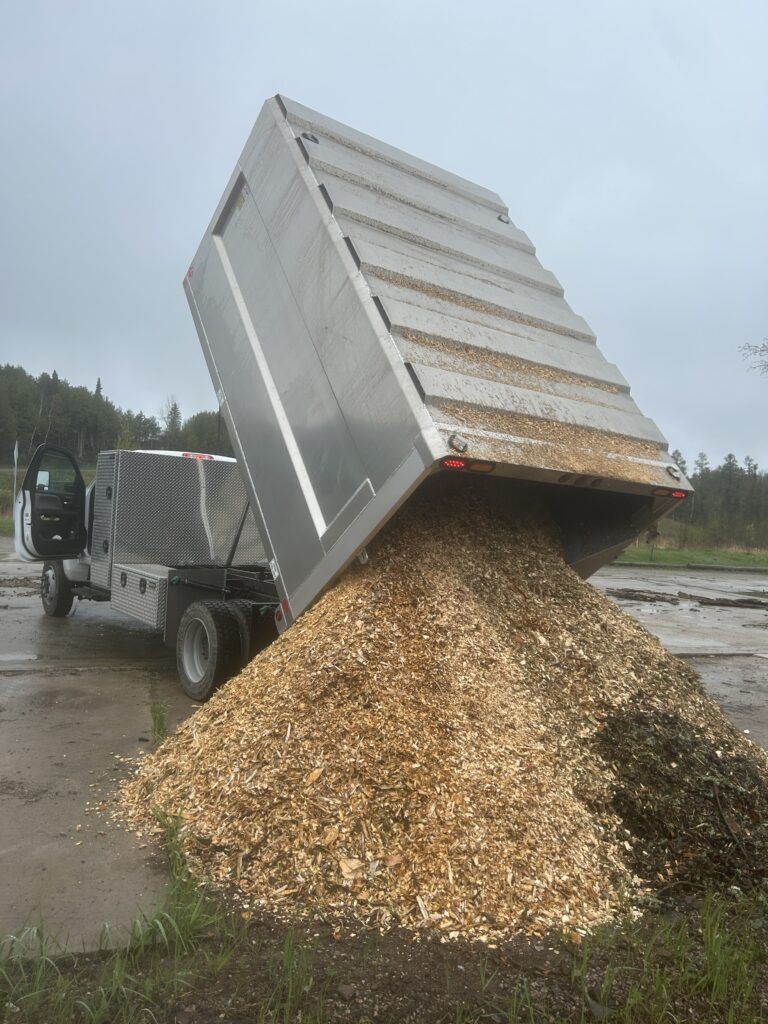
Best Practices for Chipping
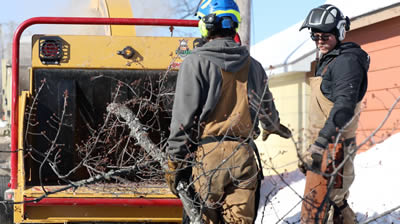
Safety First
Chipping is inherently dangerous. Take your time and follow these basic guidelines.
Environmental Considerations
Chipping is generally safe for the environment and does not spread most tree diseases or insects. For example, chipping does not spread emerald ash borer or white pine blister rust. However, there are exceptions for Buckthorn.
Special Tips for Different Tree Types
Managing Wood Chips
Wood chipping is a valuable tool for forest management, but it requires careful planning, the right equipment, and a strong focus on safety and ecological impact. Dutchman Tree Service follows these best practices and understands the unique challenges of your site and materials. We turn forest debris into a resource that synergistically benefits both your land, you, and the environment!
